The Bio Cluster of the Valencian Community takes an important step towards consolidating the Valencian biotechnology ecosystem through the creation of the Valencia Biofoundry collaborative platform, which will bring together the key players in synthetic biology and bioproduction in the region. This initiative will lay the foundations, coordinate capabilities and prepare the roadmap that will enable the region to have a reference structure in advanced biomanufacturing.
For years, the Valencian Community has concentrated talent, equipment and cutting-edge research in genetic engineering, automation, systems biology and biotechnological process design. However, these capabilities are scattered across different centres. With this project we seek to connect them under a common framework, aligned with European trends and with the biofoundry models already operational in the UK, Germany, the United States, Japan and Australia.
The initiative stems from a proposal driven by I2SysBio (UV–CSIC), where researchers such as Irene Otero-Muras and Pablo Carbonell have championed the need for a structure in Valencia that integrates genetic design, experimental automation, advanced data analysis and bioprocess development. Their expertise in modelling, systems biology and DBTL (Design, Build, Test, Learn) approaches is one of the scientific pillars on which this network will be built.
Alongside them, other leading regional centres participate, such as IBMCP (UPV–CSIC), which contributes its track record in plant molecular and cellular biology, plant platforms as biofactories and capabilities in transcriptomics and other omic technologies. Its research lines in yeasts and plants complement the vision of a biofoundry capable of working with different model organisms. IATA-CSIC, specialised in microbiology and food biotechnology, contributes its knowledge in fermentation, strain optimisation and microbial processes, essential for designing future bioproduction lines, with experience in the use of yeasts and fungal factories.
Technology centres with strong industry connections are also part of the network. AINIA brings its experience in bioprocesses, technological validation, industrial fermentation and functional ingredient development — key elements for translating laboratory prototypes into scalable processes. Meanwhile, INESCOP offers its capabilities in biomaterials, biopolymers and circular economy processes applied to sectors such as footwear and textiles, broadening the project's scope beyond the strictly biohealthcare field.
The network will also include companies linked to bioprocesses, biomaterials and emerging technologies, consolidating a space where science and industry can work towards shared goals. The combination of research centres, technology institutes and companies will allow a realistic roadmap to be defined for the future biofoundry: what capabilities it should integrate, what equipment will be needed and how to structure an efficient and transparent access model.
The project, which will run over several years, includes different phases: detailed capability mapping, comparative analysis of international initiatives, identification of real needs in priority sectors (food, health, cosmetics, textiles and chemicals), organisation of project ideation workshops and preparation of a strategic plan outlining the next steps. Our role from BIOVAL will be to coordinate this network, facilitate collaboration between entities and ensure that the Valencian Community advances in a cohesive way towards a smart bioproduction model.
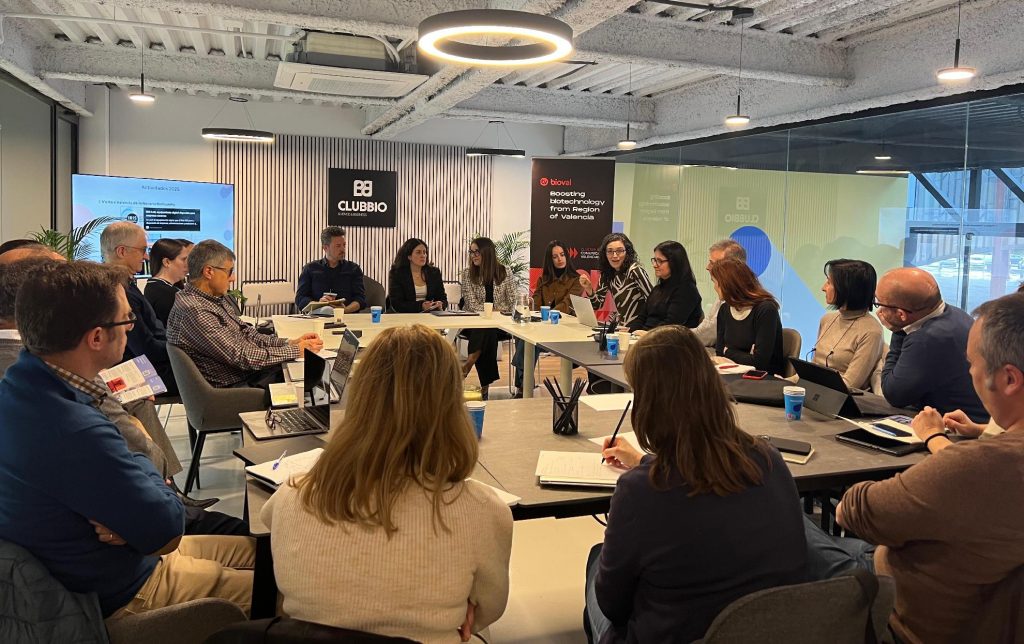
On 17 December 2025, the first project meeting took place with network participants, including companies such as Bionanopharma, Bioinicia, Madeinplant, ADM Biopolis and Perseo Biotechnology, held at the Biohub VLC building, where Bioval is headquartered.
The launch of this platform comes at a key moment. The European Commission is working on the future European Biotechnology Act (Biotech Act) and the new EU bioeconomy strategy was published recently, in which biofoundries are set to play a central role as infrastructures capable of accelerating innovation, reducing dependence on fossil resources and promoting the sustainable production of biomaterials, chemical compounds, functional ingredients and therapeutic proteins. With this project, we begin to prepare the Valencian Community to align with this emerging regulatory and technological framework. Our goal is clear: to structure a connected, competitive ecosystem ready to host in the near future the first biofoundry in southern Europe.
With Valencia Biofoundry we take a firm step towards a more innovative, sustainable and science-based productive model. We work to ensure that Valencian biotechnology has the infrastructure it needs to compete internationally and that companies and centres have a shared space to transform research into real solutions for food, health, biomaterials and the industry of the future.
Bioval is a beneficiary of a grant from the Complementary Actions for the Promotion and Strengthening of Innovation call by the Valencian Innovation Agency (IVACE+i), file number INNAC/2025/21, which will enable the coordination of leading scientific and technology centres and companies to design the roadmap for a future Biofoundry in the Valencian Community.